




















Every day, we use a variety of personal care products, from shampoos and conditioners to facial cleansers and moisturizers. Most of these products contain water and organic ingredients, creating the perfect environment for bacteria, yeast, and mold to grow.
Without preservatives, these products can spoil quickly, lose their effectiveness, or even cause skin irritations and infections. Preservatives are essential because they keep our everyday products safe and effective, from the first pump to the last.
Among the most commonly used preservatives today are parabens, a class of synthetic chemicals known for their ability to prevent microbial growth and extend shelf life. That said, there has been a growing shift toward natural preservatives such as coconut-derived options, which are eco-friendly and gentler on the skin.
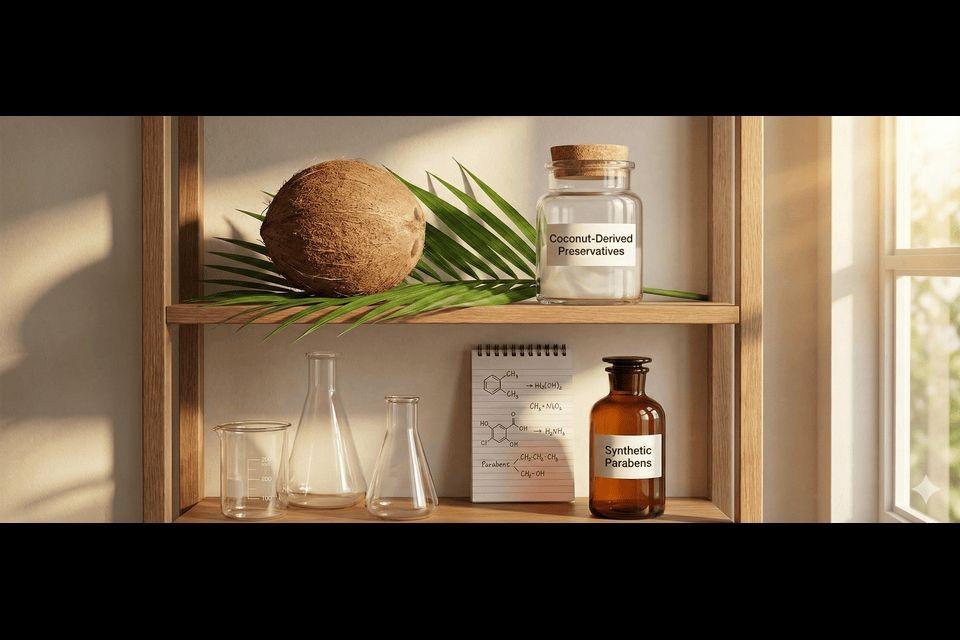
Let’s compare parabens and coconut-based preservatives, exploring how each works and which may be the better choice for personal care products:
Origin
Effective natural preservatives can be derived from coconut oil or its fatty acids, such as lauric acid and monolaurin. Since they come from plants, they are biodegradable and environmentally friendly. Many consumers appreciate this natural origin, viewing coconut-based preservatives as a cleaner and more sustainable option for personal care products.
Parabens, on the other hand, are synthetic chemicals created in a lab. They have been widely used for decades because they are effective and relatively inexpensive. While parabens do the job well, their artificial origin makes them less appealing to people who prefer products made with natural, plant-based ingredients.
Antimicrobial Effectiveness
Parabens are highly effective at preventing microbial growth across a wide range of products. Their consistent and long-lasting protection is one reason they have dominated mainstream cosmetics. This reliability has made them a staple in many formulations, particularly those with high water content that are more prone to contamination.
Natural preservatives from coconut can combat certain bacteria, yeast, and fungi, helping to keep products safe for use. Although they may not offer the same broad-spectrum protection as synthetic options, they perform reliably, especially when combined with other natural antimicrobial ingredients in carefully formulated products.
Skin Sensitivity and Irritation
One advantage of coconut-derived preservatives is their gentle nature, which often provides moisturizing and soothing benefits to personal care products. This makes them especially suitable for sensitive skin and formulations marketed as clean or natural. Their dual role as both a preservative and a skin-friendly ingredient is a strong selling point.
Although parabens are generally considered safe for most users, some people may experience sensitivities or prefer to avoid them due to concerns about hormone disruption. For consumers who prioritize both skin comfort and natural ingredients, natural preservatives may be a more appealing choice.
Shelf Life and Stability
When it comes to long-term stability, parabens are highly stable and can withstand heat, light, and variations in pH, making them a reliable choice for commercial products. This stability allows manufacturers to produce large batches without worrying about microbial growth, ensuring products remain safe and effective throughout their shelf life.
In oil-based or moderately water-based formulations, coconut preservatives help maintain product safety and freshness while keeping everything natural. They may have a slightly shorter shelf life than synthetic chemicals, but thoughtful formulation can extend durability without sacrificing eco-friendly appeal. With careful storage and proper packaging, coconut-based products can still remain effective and safe for everyday use.
Environmental Impact
Using plant-based preservatives like coconut helps reduce the environmental footprint of personal care products. They are biodegradable and derived from a natural resource, making them a more sustainable option. Incorporating coconut-based preservatives also supports eco-conscious practices in sourcing and production, which appeals to consumers seeking products that are safe for both people and the planet.
In comparison, synthetic preservatives such as parabens are less biodegradable, raising some environmental concerns over time. While the actual risk of accumulation in ecosystems is generally low at the concentrations used in cosmetics, the perception that natural ingredients are gentler on the environment gives coconut-derived preservatives a clear advantage.
Cost and Availability
Natural preservatives can be more expensive and sometimes harder to standardize, but many brands see this as a worthwhile investment. Consumers are also increasingly willing to pay a premium for products that are clean, safe, and environmentally friendly.
Meanwhile, parabens remain cost-effective and widely available, which is why they are commonly used in mass-market products. However, the growing demand for natural alternatives shows that natural preservatives can balance performance with eco-conscious appeal, making them a strong contender for the future of personal care formulations.
Choosing the Right Preservative for Your Products
When it comes to preserving personal care products, both coconut-derived preservatives and parabens have their strengths. Parabens offer excellent stability and broad-spectrum protection, making them a reliable choice for many commercial formulations. Coconut-based preservatives, on the other hand, provide a gentle and eco-friendly alternative that meets the growing demand for clean and sustainable products.
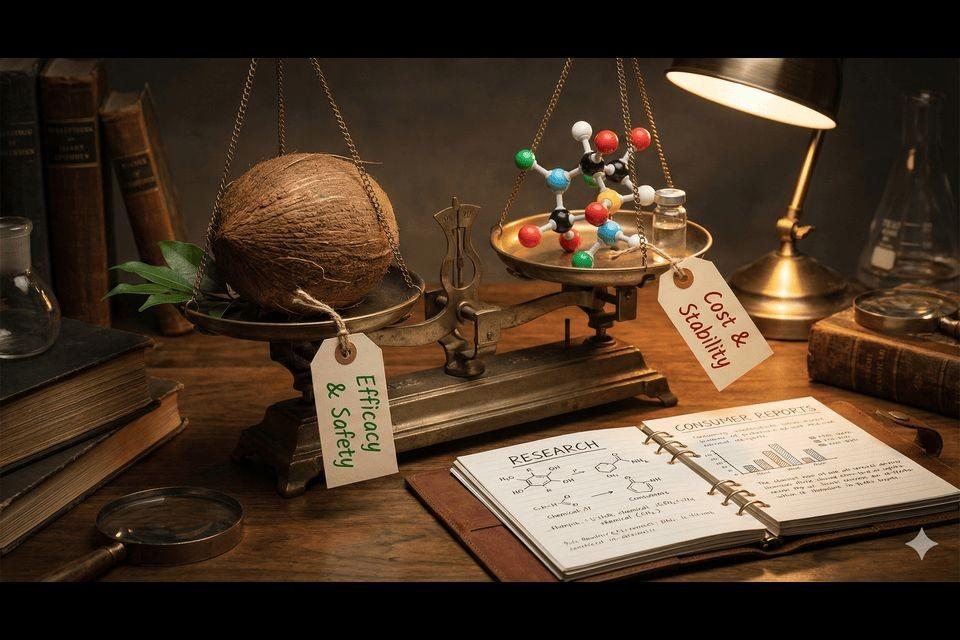
Ultimately, the choice comes down to balancing effectiveness, safety, and environmental impact. But for those seeking a natural, skin-friendly option that supports sustainability, coconut-based preservatives show great promise and are poised to play a major role in the future of personal care products.